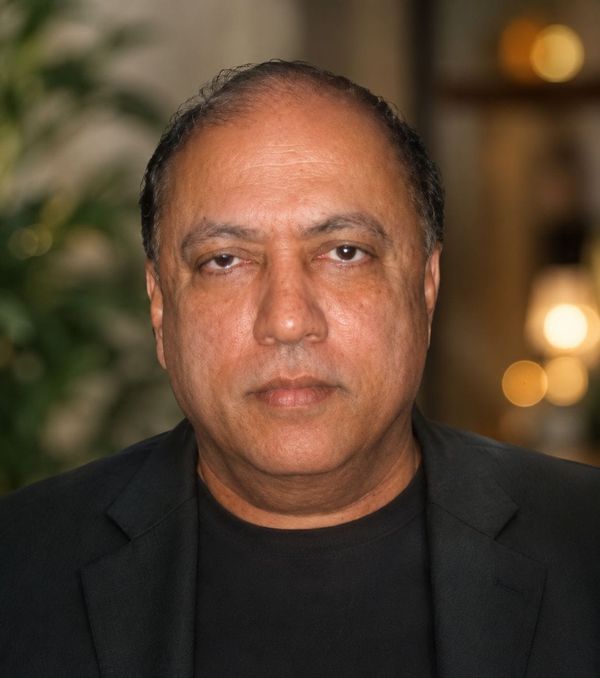
With the passing of D.B.S. Jeyaraj, Sri Lanka has lost one of its most distinctive journalistic voices -a writer whose name became synonymous with fearless political analysis, sharp observation, and uncompromising commitment to the craft.
For decades, his work illuminated the country’s most difficult truths and gave readers a rare window into the forces shaping its history.
Jeyaraj was not merely a journalist; he was a chronicler of an era. His reporting and commentary carried the weight of experience, the discipline of deep sourcing, and the confidence of a man who understood Sri Lanka’s political landscape better than most.
In a media environment often crowded with noise, his writing stood apart for its clarity, precision, and authority.
Beginning his career as a reporter for Virakesari in 1977, he went on to build a remarkable body of work across multiple publications and platforms. Over the years, he became especially known for his coverage of Tamil politics, the civil war, and the broader currents of national power.
Readers followed him closely because he could explain the complex and the sensitive with uncommon ease.
Yet his path was never simple. Jeyaraj faced threats, intimidation, and displacement, but he continued to write with remarkable courage.
Even from afar, he remained deeply engaged with Sri Lanka’s unfolding story, producing commentary that was often ahead of its time and rooted in sources that earned him both admiration and astonishment.
For many journalists, including those who followed his style closely, he was more than a colleague in the profession – he was a benchmark.
I personally followed some of his writing styles during my journalistic career. At times, his articles seemed almost unbelievable, and we often wondered how he gathered such precise information.
We sometimes questioned whether everything he wrote could be true, but more often than not, his secret sources proved to be accurate.
That is why his passing feels so profound. It is not only the death of a veteran journalist, but the closing of a chapter in Sri Lankan media history.
His voice carried through moments of conflict, uncertainty, and change, and in doing so, he left behind a legacy that younger journalists will study for years to come.
D.B.S. Jeyaraj will be remembered not just for what he wrote, but for the courage it took to write it.
In an age when truth is often contested and memory is often short, he stood as a reminder that journalism, at its best, is both a service and a sacrifice. His absence will be deeply felt, but his work will continue to speak long after the headlines have moved on.