By Kuma Kindelpitiya| May 16, 2026 | Colombo
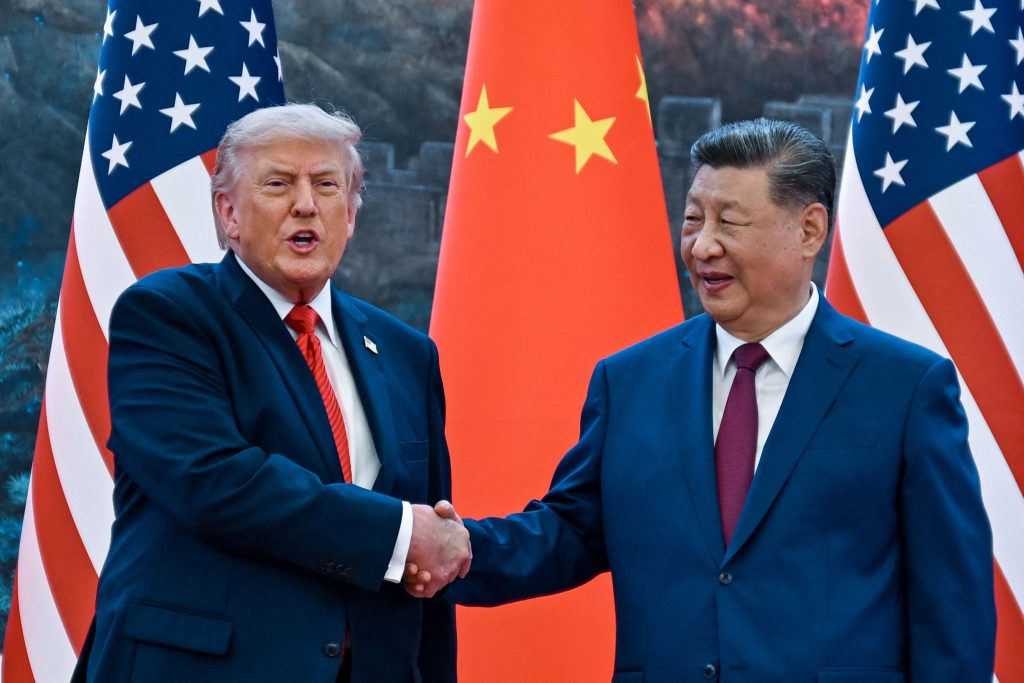
When President Donald Trump and his U.S. delegation returned from their historic May 2026 visit to Beijing, something unusual happened on the tarmac.
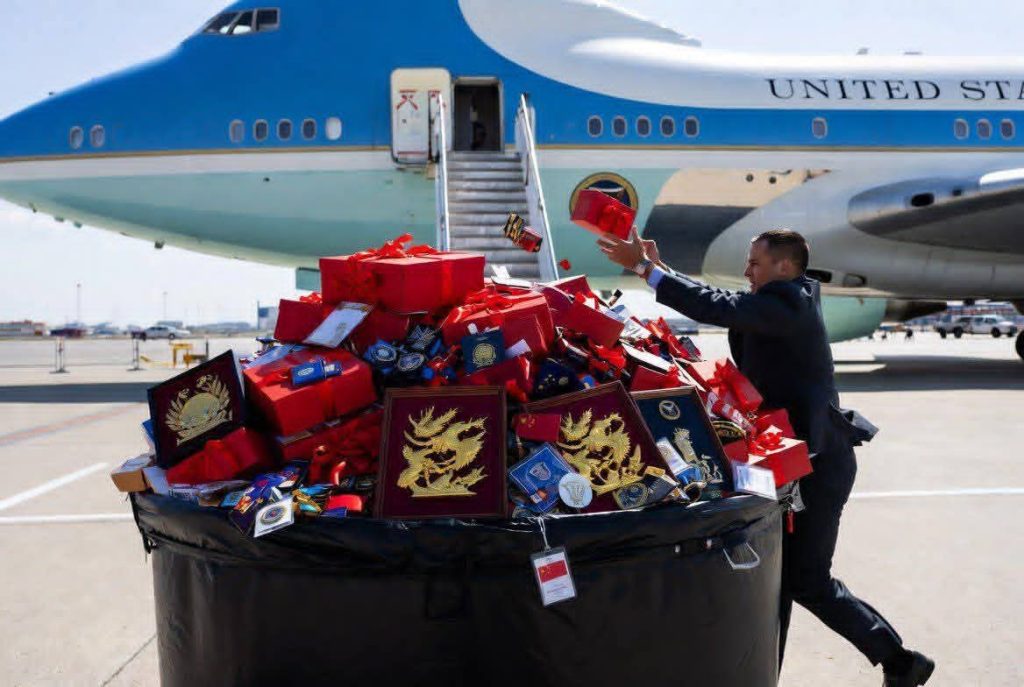
Before boarding Air Force One, the entire team threw every Chinese gift, badge, burner phone, and official credential into trash bins-right in front of cameras. The rule was clear: “Nothing from China allowed on the plane”
Some called it rude. Others called it a diplomatic insult. But from the point of view of national security, intelligence, and sovereignty, this was not a mistake—it was a necessary protection measure that any responsible government would take.
Why This Was Done: The Security Reason
- Air Force One Is a Top-Secret Seat
Air Force One is not just a passenger plane. It carries the U.S. President, secure communication systems, and classified military data. Allowing unknown electronics or gifts from a rival nation like China onto this plane would be like opening a door to spies. Intelligence experts say even small items can hide listening devices or tracking chips.
- China Is Seen as a Major Intelligence Threat
U.S. intelligence agencies have long warned that China poses one of the biggest espionage risks to American security. Chinese-made phones, chargers, and even everyday gifts have been found to contain hidden backdoors that can steal data or record conversations. The U.S. has already banned companies like Huawei and ZTE from its networks because of these risks. - The “Burner Phone” Problem The delegation was told to throw away Chinese-issued burner phones. In intelligence work, “burner phones” are often used by spies because they can be tracked or programmed to send secrets without the user knowing. Throwing them away was not about being impolite-it was about keeping secrets safe.
- This Is Standard Practice
The U.S. does this often, just not always in public:
Foreign-made electronics are banned from secure government buildings.
Gifts from enemy nations are checked or destroyed.
Diplomats must pass security checks before returning home.
What made this event different is that cameras saw it. But the security rule itself is normal and necessary.
Why China Stayed Quiet?
Interestingly, the Chinese Foreign Ministry did not officially protest. Spokesperson Guo Jiakun did not mention the trash-bin incident. Instead, he said the visit helped build “stable and positive U.S.-China relations”
This silence is smart:
It avoids making the situation worse.
It gives China a chance to use the story later if needed.
It makes the U.S. look “rude” in the eyes of the world, which can help China in future negotiations.
But behind the scenes, Chinese intelligence is likely reviewing their own rules, knowing the U.S. took nothing they gave.
Final Thought: Safety Over Show
Throwing away Chinese gifts was not a mean act. It was a necessary step to protect national security. In a world where spying can happen through a pen, a phone, or a gift, trust is dangerous. The U.S. chose safety over looking polite-and that is the right choice for any country that values its independence.
If the situation were reversed, China would not have stayed quiet. They would have made a loud protest. The U.S. did the hard thing without making excuses, and let the world see it.
In national security, the most powerful action is not a speech. It is a trash bin.
Written by: Kindelpitiya
Media and Security Analyst, Colombo, Sri Lanka