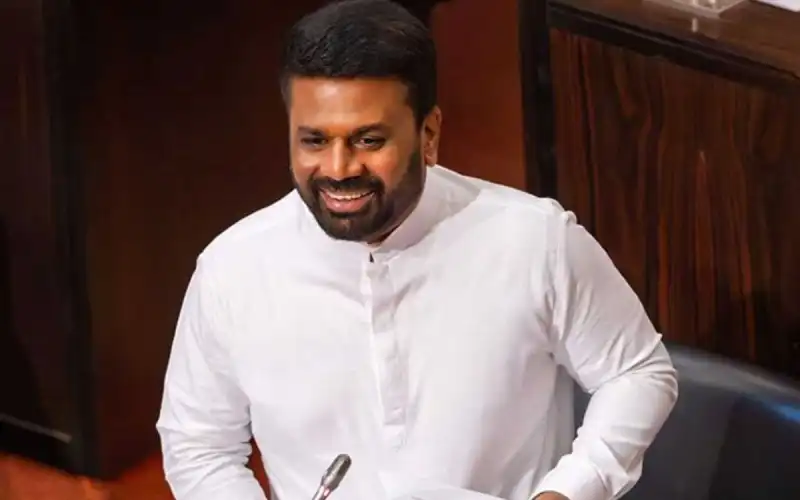
The Budget Proposal for 2026, which will determine Sri Lanka’s future economic direction, was recently presented to Parliament by President Anura Kumara Dissanayake, who also serves as Minister of Finance. This occasion, capturing the attention of the entire nation, marks the second budget presented since the National People’s Power government came to power.
President Anura Kumara Dissanayake began his budget speech shortly before Parliament convened. During the session presenting the 2026 budget proposal, he informed the assembly of a significant strategic change expected in the country’s tax structure. The government’s goal, he emphasized, is to progressively reduce the tax burden on ordinary citizens.
The President highlighted the current highly unfair tax ratio in the country, where direct taxes make up 25% and indirect taxes 75%. This means that three-quarters of the government’s tax revenue comes from indirect taxes applied equally on all citizens through goods and services purchases.
To change this situation, the President assured that the government is committed to raising the direct tax share to 40% and reducing the indirect tax share to 60% over the next few years, implementing a clear strategic plan with strong confidence.
This year, foreign debt repayments amount to 2,435 million dollars, of which 1,948 million dollars were settled by September 30, the President said.
By December 31, another 487 million dollars are scheduled for payment, bringing the total foreign debt service payments to an increase of 761 million dollars compared to 2024, the President noted.
By 2028, foreign debt service payments are expected to be around 3,259 million dollars, an increase of approximately 824 million dollars compared to 2025, the President added.
A significant step is underway to digitize payments in government institutions such as Govpay. The Digital Economy Authority plans to successfully issue 5G licenses soon.
An allocation of 3,000 million rupees has been made for digital infrastructure. A Digital Economy Subcommittee and Council will be established under the Digital Economy Act.
A digital ID awareness campaign will be held early in 2026, with the first digital IDs issued in March.
All government transactions will have online facilities. A proposal is underway to waive service fees for payments in government institutions as an initial step.
To ease economic pressure on university students and secure the country’s future, President Anura Kumara Dissanayake announced special relief for the university community through the 2026 budget proposal. In presenting the budget to Parliament, he stated the government decided to increase the monthly Mahapola scholarship allowance, which assists thousands of students in their education.
According to the President’s proposal, the current monthly Mahapola scholarship allowance will increase by 2,500 rupees. From January next year, the allowance will rise to 10,000 rupees per university student recipient.
Considering the current cost of living and the severe financial difficulties faced by students pursuing higher education, the government hopes this will provide significant relief, the President further emphasized in his budget speech.
“There are constant claims that this government will collapse, there will be a crisis, that a new president will arise in August, another in December, and that the other president appointed until next March will fail in 2028,” the President said.
“I do not believe we will have to bear a heavy expense for vehicles next year, nor in 2027. That’s because what we have done so far includes repaying an additional 761 million dollars in loans and 1,373 million dollars so far for vehicles. Whether we can or cannot repay, we will remember that we are here until 2028 and we will continue repaying,” he concluded.