Hacked Millions, Weak Safeguards

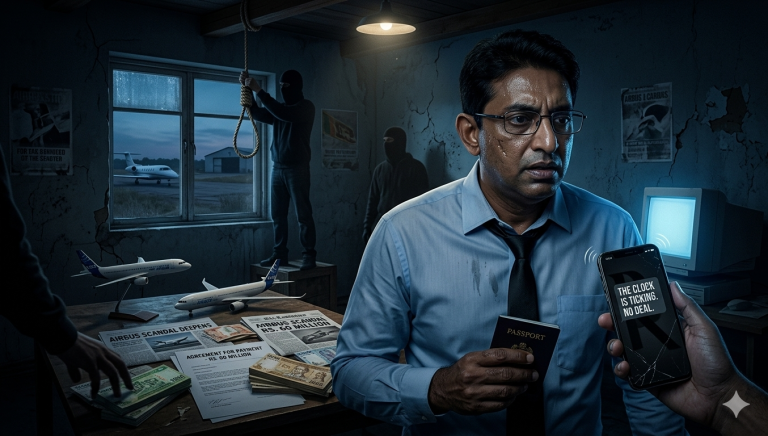
Just months after the National People’s Power (NPP) government came to power boasting of “system change” and clean governance, state coffers were hit by a cyber heist that has left the country stunned.
The Ministry of Finance has admitted that the payment system was compromised, and complaints have now gone to the Sri Lanka Computer Emergency Readiness Team (SL‑CERT), the Criminal Investigation Department (CID), and the Financial Intelligence Unit (FIU) of the Central Bank.
But the real damage is political: the scandal has turned into a symbol of poor cyber security and weak internal controls in a ministry that was supposed to lead the economic recovery.
Coalgate: Power, Profits and Politics

Parallel to the hacking row, the NPP government is now neck‑deep in what the media is calling “Coalgate” – a multi‑billion‑rupee saga over coal imports for the Lakvijaya (Norochcholai) Coal Power Plant.
Opposition MPs allege that the government ignored proper tender procedures, accepted low‑grade coal at higher prices, and then forced the power utility to burn more fuel, pay more freight, and charge the public more for electricity.
Critics say the deal was rigged to favour certain suppliers while bypassing experts and technical checks, turning a supposedly routine fuel contract into a major corruption scandal.
The Energy Minister has been dragged into court, fingerprinted, and released on bail, further denting the image of a cabinet that promised transparency and professional management.
Red‑Flagged Containers: Who Let the Ship Go?

The ports are the next trouble spot. In early 2025, Sri Lanka Customs released over 300 “red‑flagged” containers from the Colombo Port without the mandatory manual inspection, raising serious doubts about smuggling, tax evasion, and misuse of authority.
These containers were flagged as high‑risk, yet officials cleared them in a haste that opposition MPs describe as either gross negligence or a deliberate cover‑up.
Customs has offered a series of technical explanations, but critics say the real issue is political: whether the government or its allies ultimately pressured the ports to speed up clearance in exchange for favours or kickbacks.
The incident has become a poster‑child scandal for the NPP’s early days, used by rivals to argue that the “system change” slogan is just camouflage for more of the same.
Double‑Cab Pickups: Power on Four Wheels

Then comes the double‑cab pickup scandal, which opposition MPs have dubbed a textbook case of wasteful spending and rigged procurement.
The government decided to import 1,775 brand‑new double‑cab pickup trucks for use by various state institutions, claiming this would improve public‑service mobility.
But critics hit back hard, accusing the administration of shortening tender periods, manipulating technical criteria, and pushing the deal through without proper competitive bidding.
Many ordinary Sri Lankans, still counting rupees after years of economic crisis, ask why the same urgency and money could not be spent on buses, ambulances, or rural infrastructure instead of fancy four‑wheelers.
Six Ministers Under the Bribery Commission’s Lens
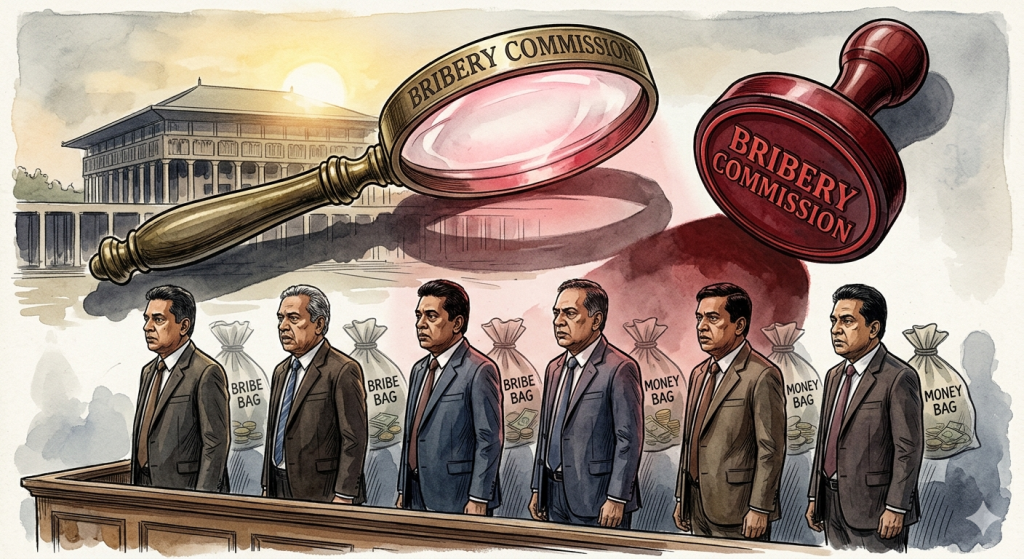
The pressure is not just scandal‑by‑scandal; it is now systemic. The Commission to Investigate Allegations of Bribery or Corruption (CIABOC) has opened probes into the assets of six ministers of the NPP government under the Money Laundering Act, including a complaint filed by a civil‑society watchdog.
While the investigations are still on, the optics alone are damaging: the very party that came to power promising to end corruption now has half a dozen cabinet members under the anti‑graft spotlight.
Pro‑government analysts stress that the NPP has also launched aggressive anti‑corruption drives and investigations against figures from previous regimes, calling it evidence of “no‑holds‑barred reform.”
But critics retort that talk of “system change” rings hollow when the same patterns of closed‑door deals, questionable tenders, and rushed clearances keep reappearing.
Clean‑Image Cracks Under Pressure
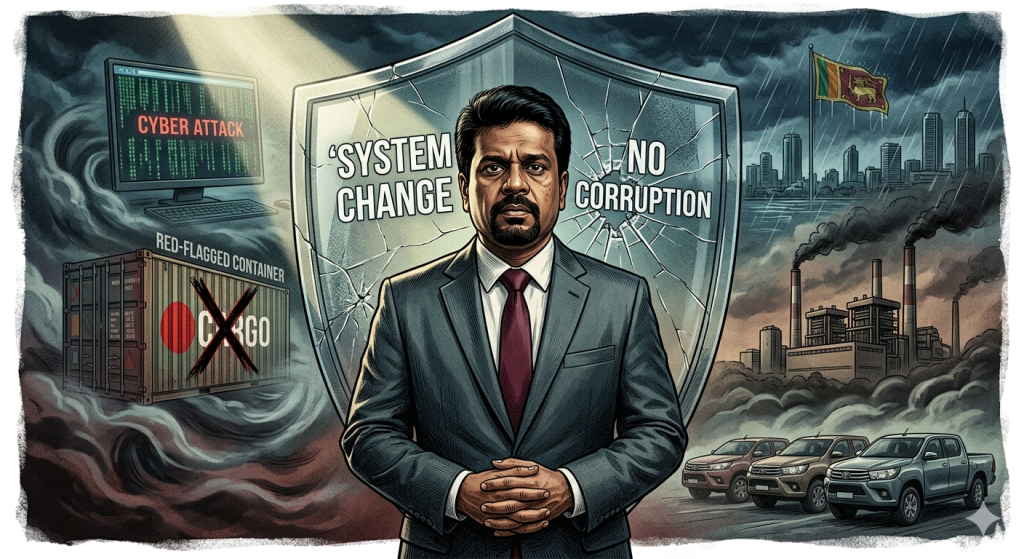
The NPP’s dilemma is simple but brutal: the electorate voted for a government that promised to break the old corrupt order, yet the first serious shocks came from its own side.
Instead of only hunting the past, the administration now has to explain its own central‑bank‑linked hacking fiasco, coal‑contract mess, container‑clearance chaos, and luxury‑truck splurge.
If the investigations are seen as transparent and fair, the NPP can still salvage its reform agenda. But if the answers stay vague, the committees are stacked, and powerful ministers walk free, the “system change” slogan may join older ones in the graveyard of political slogans that promised much and delivered little.