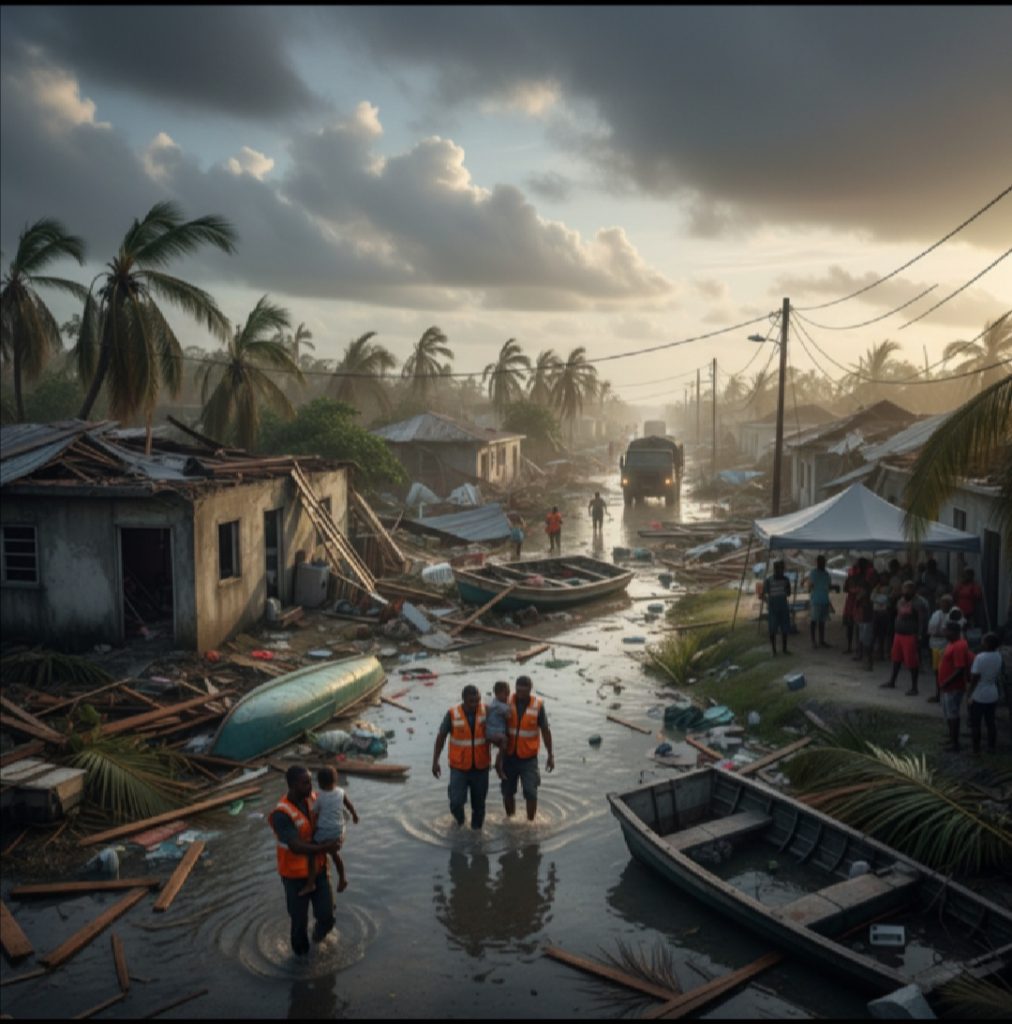
Kingston, Jamaica – Jamaica is reeling from the catastrophic impact of Hurricane Melissa, which struck the island on October 28, 2025, as a Category 5 hurricane – the most powerful storm ever recorded to make landfall in the country.
The hurricane carved a path of destruction across the island, leaving widespread damage, flooding, and power outages.
Prime Minister Andrew Holness declared the entire island a disaster zone, activating emergency protocols and mobilizing resources for relief operations.
“Melissa has devastated our nation,” Holness said, emphasizing that the hardest-hit areas suffered severe damage to homes, infrastructure, and hospitals including Black River Hospital and others in the region.
With sustained winds reaching 185 mph and surges of up to 13 feet, the hurricane tore off rooftops, toppled trees, downed power lines, and caused severe flooding in many parishes, particularly St. Elizabeth, home to vital agricultural zones.
Many communities remain submerged, complicating rescue efforts and the restoration of essential services.
Approximately a significant portion of Jamaica’s 2.8 million people were left without electricity, and blocked roads from debris have hampered access to many affected areas.
While no deaths have been immediately confirmed, officials warn that casualties are expected given the scale of the storm’s fury.
Emergency responders are working to restore power, clear roads, and provide shelter and assistance to displaced residents. The government has requested international aid as recovery and rebuilding efforts are anticipated to take months.
Hurricane Melissa’s rapid escalation and devastating landfall underscore concerns over increasing hurricane intensity linked to climate change.
The island nation now faces a long road ahead to recover from what experts are calling one of the worst natural disasters in its history.